
Korean Seaweed
김
From sea farm to table: cultivation, varieties, how Koreans eat gim, the tradition of gim-bugak, official masters and practical places to buy.
Gim begins on cultivation nets in cold coastal water.
Most supermarket gim is farmed rather than gathered wild. In Korea, seed is attached to cultivation nets in autumn, the nets are managed in cool coastal water, and the growing blades can be harvested repeatedly during the season.

Spores or seed material are attached to the cultivation net.
Nets are set in coastal water using fixed or floating systems.
Blades are cut and can regrow for additional harvests.
Fresh gim is washed and formed into thin sheets.
Sheets become plain dried gim or roasted/seasoned products.
Cool-water cultivation is central to gim quality. Harvest timing, water temperature and repeated cutting affect blade thickness, texture and aroma.
“Gim” is a family of textures and uses.

Dolgim
Rougher, more irregular texture and a stronger ocean aroma. Often chosen for a rustic, crisp bite.

Gopchang-gim
A market name commonly used for curled early-season laver prized for fragrance and texture. Quality still varies by producer and harvest.

Seasoned gim
Roasted with oil and salt. Small 도시락김 packs are the familiar everyday table format.
Also on labels: 재래김, 마른김, 김밥김, 도시락김, 김자반. These words can describe species/style, preparation or intended use, so do not treat one term as a universal quality grade.
Hot rice is only the beginning.
Rice + table gim
Wrap a bite of hot rice with crisp seasoned gim. This is the simplest everyday use.
Gimbap sheets
Large, stronger sheets are used to hold rice and fillings. They are usually less oily than snack-style table gim.
Gim-garu · 김가루
Crushed roasted gim goes over fried rice, noodles, bibimbap-style bowls and rice balls.
Plain gim in cooking
Unseasoned gim can be used in soups, seasoned side dishes and other recipes where oil and salt are added separately.
A traditional preservation technique turned premium snack.
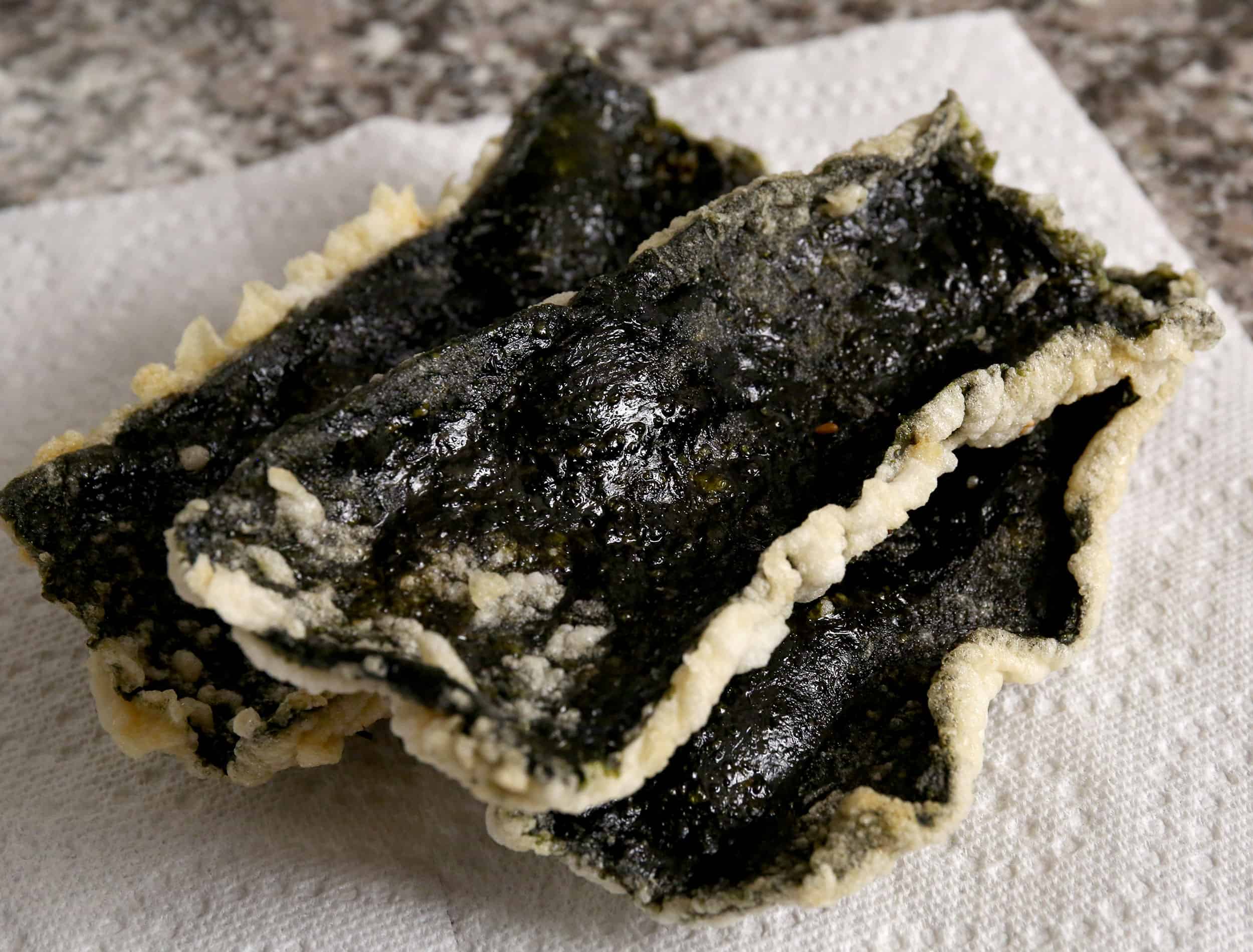
Gim-bugak is not ordinary roasted seaweed. Gim is coated with glutinous-rice or starch paste, dried until the coating sets, then fried so the paste expands into an airy, brittle shell.
The result is thicker, crunchier and more substantial than table gim. It can be eaten as banchan, a snack or an accompaniment to drinks.
What to compare
Check the gim origin, rice/starch coating, frying oil, seasoning and how well the package protects the brittle pieces. For travel, rigid small packs are safer than a loose oversized bag.
The same coat–dry–fry logic is also used with kelp, chili, lotus root and other ingredients. Modern producers have turned the old preservation technique into a snack category.
Two masters directly connected to gim.
Kim Cheon-il · 김천일
Designated 대한민국 수산식품명인 No. 9 in 2021 for dried gim. The Ministry of Oceans and Fisheries says he continued three generations of gim farming and dried-gim production in Wando.
Where to buy: Wandomulsan / 새우표 완도김 sells table gim, roasted sheets, gim flakes and premium varieties through its official shop.
Yoon Hyo-mi · 윤효미
Designated 대한민국 수산식품명인 No. 14 in 2024 for gim-bugak. The Ministry says she modernized and developed a gim-bugak technique passed down through four generations.
Where to buy: O Hee-sook Traditional Bugak / Haneulbio offers glutinous-rice gim-bugak and other traditional bugak products.
Here, “master” means the official 대한민국 수산식품명인 designation administered by Korea's Ministry of Oceans and Fisheries—not a marketing nickname.
See the market, not just a line of text.

Jungbu Dried Seafoods Market
A specialist market where travelers can compare plain gim, dried seaweed and other dried seafood across many sellers.

Seoul Station supermarket
For predictable labels, gift multipacks and easy suitcase packing, a large supermarket at Seoul Station is the simplest last-stop option.
Protect it from humidity and crushing.
Keep individual packs sealed and dry. Gim loses crispness rapidly once exposed to humid air. Bulk plain sheets should be packed with moisture protection, and rigid outer packaging helps prevent suitcase damage.
Reference basis: National Institute of Fisheries Science for cultivation; Ministry of Oceans and Fisheries for master designations; official producer shops and market/visitor information for buying guidance. Product availability and opening hours can change.
Compare Korean seaweed by format and intended use.
For Korean seaweed or gim, check whether it is plain or seasoned, how many inner packs are included, the serving format and storage instructions. Individually packed portions can be convenient as Korean food souvenirs, while larger packs may suit regular meals at home. Packaging and seasoning differ by product, so use the guide as a checklist and follow the actual label.